
August 16, 2026
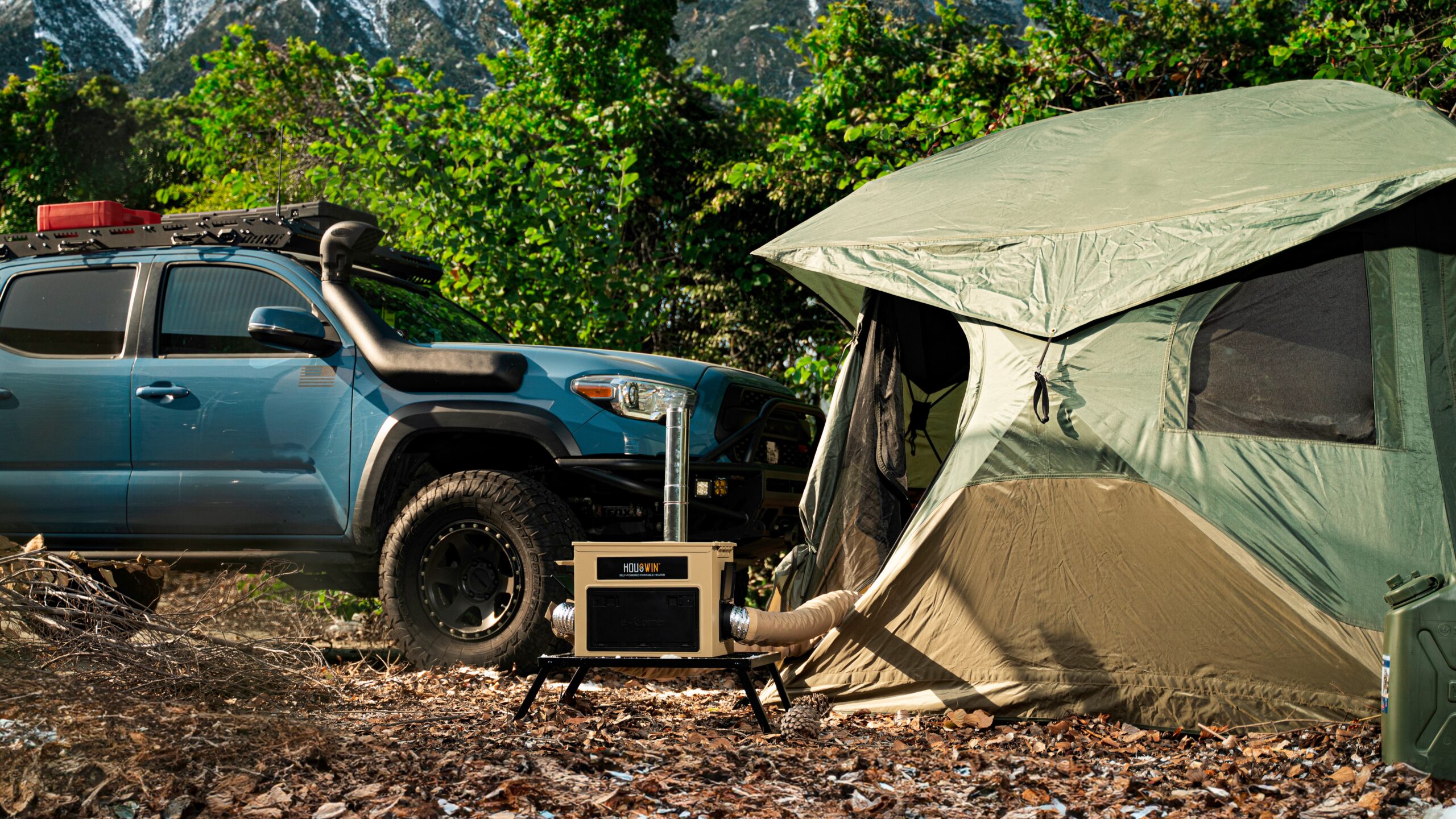
Off-Grid Heating for RVs, Overlanding, Camping, Ice Fishing & Emergencies
Getting Off-Grid Changes What “Reliable Heat” Means
At home, staying warm is usually simple. Turn up the thermostat. But take away the electrical grid and things change fast. Now you have to think about where your heat comes from. You also have to think about what powers the equipment creating that heat. That’s the part people sometimes overlook.
A traditional diesel heater may use diesel to create heat, but it still needs electricity to operate. That power may come from a vehicle, battery bank, power station, generator, or another electrical source. So when you’re planning an off-grid heating system, the question isn’t only: “Do I have enough fuel?”
There’s another question: “Can I keep the heater powered?”
Houswin Self-Powered Heating was designed to reduce that dependency. And that matters in more places than you might think.
Off-Grid Heating for RVs and Truck Campers
An RV already has plenty of demands on its electrical system.
- Lights.
- Refrigeration.
- Electronics.
- Charging devices.
- Pumps and other equipment.
Add a traditional diesel heater, and heating becomes another load you have to consider. That’s manageable when you’re plugged into shore power. It becomes more important when you’re camping away from hookups.
The farther you get from reliable electrical power, the more you have to think about battery capacity, charging, and how long you plan to stay.
Houswin takes a different approach. Its built-in power generation system is designed to supply the electricity needed for continued heater operation once the heater reaches normal operation. That means your heat doesn’t have to keep drawing operating power from your RV or truck’s electrical system. For someone trying to stay off-grid longer, that’s a meaningful difference.
Less dependence on outside power. Less demand on the rest of your electrical setup. More confidence in your heat.
Overlanding: Go Farther Without Building Everything Around Battery Life
Overlanding is about getting away from the easy places. That’s part of the point. But the farther you travel, the more important your equipment choices become. You may already be carrying recovery equipment, food, water, fuel, tools, camping gear, communications equipment, and a power system.
Every extra dependency adds something else to manage. Traditional diesel heat can add another electrical load to that list. That can lead to a familiar question: “How much battery do I need to keep everything running?”
Self-Powered Heating changes the question. Instead of building your heating plan around continued external electrical power, Houswin is designed to generate the operating power it needs while running.
You still need diesel fuel. You still need to start and operate the heater correctly. But once the heater reaches normal operation, its built-in generation system supplies continued operating power and recharges its internal battery pack. For an overlander, the benefit isn’t complicated.
Go farther. Stay longer. Depend less.
Camping: Heat Shouldn't Require a Complicated Power Setup
Cold-weather camping can turn a simple trip into an equipment-management exercise. You start with the things you actually want to bring. Then come the things needed to support those things.
- A battery.
- Maybe a larger battery.
- A charging system.
- A power station.
- Backup power.
Before long, staying warm can require an entire support system. Houswin was designed around a simpler idea.
Fuel it. Start it. Stay warm.
The heater uses its internal rechargeable battery pack for normal startup. Once it reaches stable operation, the built-in generation system supplies the electricity needed for continued operation and recharges the battery pack. That reduces the need to build your heating setup around an external electrical source. For remote and winter camping, simplicity matters. Less equipment to manage means more time enjoying where you went in the first place.
Ice Fishing: When the Cold Is Part of the Experience
Ice fishing puts you in an environment where reliable cold-weather equipment matters. You’re away from the comforts of home. Temperatures are low. And depending on where you fish, normal electrical power may not be anywhere nearby.
Houswin portable heaters are designed for off-grid applications that include fishing. The same principle applies here as it does with camping and overlanding: reducing dependence on an outside electrical source gives you one less system to manage. Houswin generates the operating power needed for continued operation once the heater is running normally. That makes self-powered heat worth considering anywhere electrical power is limited or unavailable.
Important: Always follow the Houswin Owner Manual for placement, ventilation, exhaust routing, and safe operation. Heater exhaust must always be vented outdoors.
Emergency Preparedness: What Happens When the Power Is the Problem?
A winter power outage changes the meaning of “backup.” If your heating solution depends on the same electrical system that just failed, you may not have much of a backup. That’s why emergency heat isn’t only about having a heater. It’s about understanding what that heater depends on.
- Does it need household electricity?
- Does it depend on a battery bank?
- Will you need a generator?
- How will you recharge your power source if the outage lasts?
Those are important questions to answer before the lights go out. Houswin’s self-powered design reduces the heater’s dependence on those outside electrical sources for continued operation. Once running normally, the integrated power generation system supplies the electricity needed to continue operating. That gives prepared families another option when normal electrical power is unavailable. Not because emergencies are predictable. Because they aren’t.
Different Situations. The Same Problem.
An RV owner and an ice fisherman may not have much in common on the surface. Neither does an overlander and a family preparing for a winter outage. But when it comes to heat, they can face the same basic problem: Reliable heat often depends on reliable power.
That’s why off-grid heating isn’t only about choosing a heater with enough heat output. You also have to look at everything required to keep that heater operating. For traditional systems, that can mean:
- External batteries
- Vehicle power
- Generators
- Shore power
- Charging equipment
- Backup plans
Houswin approaches the problem differently. Instead of treating heat and operating power as separate problems, the heater is designed to produce heat while generating the electrical power needed for continued operation.
That’s Self-Powered Heating.
What Should You Look for in an Off-Grid Heating System?
Before choosing any off-grid heating setup, ask a few simple questions.
1. What does the heater depend on?
Don’t stop at the fuel source. Find out what electrical power the heater needs to start and continue operating.
2. Where will that power come from?
A battery? Your vehicle? A generator? Shore power? Knowing this tells you what other equipment your heating system depends on.
3. What happens when that power isn’t available?
This is where off-grid planning becomes real. A heater is only useful when the systems supporting it are available too.
4. How much equipment do you want to manage?
More equipment isn’t always better. Every additional battery, generator, charger, cable, or connection adds another part of the system to carry, monitor, and maintain.
5. Does the system fit how you actually travel or prepare?
The right heating setup for a campground with hookups may be very different from the right setup for remote overlanding or emergency preparedness.
Start with where you’ll use it. Then work backward.
Why Self-Powered Heating Changes the Equation
Self-Powered Heating doesn’t change the reason you need a heater. You still want warmth. What changes is what your heat depends on. Houswin combines portable diesel heating with integrated power generation.
The internal battery pack provides normal startup power. After the heater reaches stable operation, the built-in generation system supplies the electricity needed for continued operation and recharges the battery pack. That helps remove continued dependence on an external battery bank, vehicle electrical system, generator, or shore-power connection. And when you’re away from the grid, reducing dependencies matters. Because every system you don’t have to rely on is one less system you have to worry about.
Off-Grid Heat Is Really About Confidence
People don’t go overlanding because they want to monitor batteries all weekend. They don’t take an RV into the mountains because they want to manage another electrical load. They don’t go winter camping or fishing because they want more equipment to worry about. And nobody prepares for a winter emergency hoping their backup plan will work.
They want confidence. Confidence that when temperatures drop, their heating system is ready. That’s the bigger idea behind Houswin. The technology creates operating power. The real benefit is independence.
Final Thoughts
RVs. Overlanding. Camping. Ice fishing. Emergency preparedness. The environments are different, but the need is the same:
Reliable heat where electrical power may be limited or unavailable.
Traditional diesel heaters can create heat, but they continue to depend on an outside electrical source. Houswin was designed to reduce that dependency. Start the heater. Let it reach normal operation. Then its built-in generation system supplies the power needed for continued operation while recharging the internal battery pack.
Less dependence on outside power. Less equipment to manage. More confidence when you leave the grid.
Self-Powered Heat. Anywhere.
Want to understand what makes Houswin different from a traditional diesel heater?
Read: Why Houswin Self-Powered Heaters Are Different From Traditional Diesel Heaters